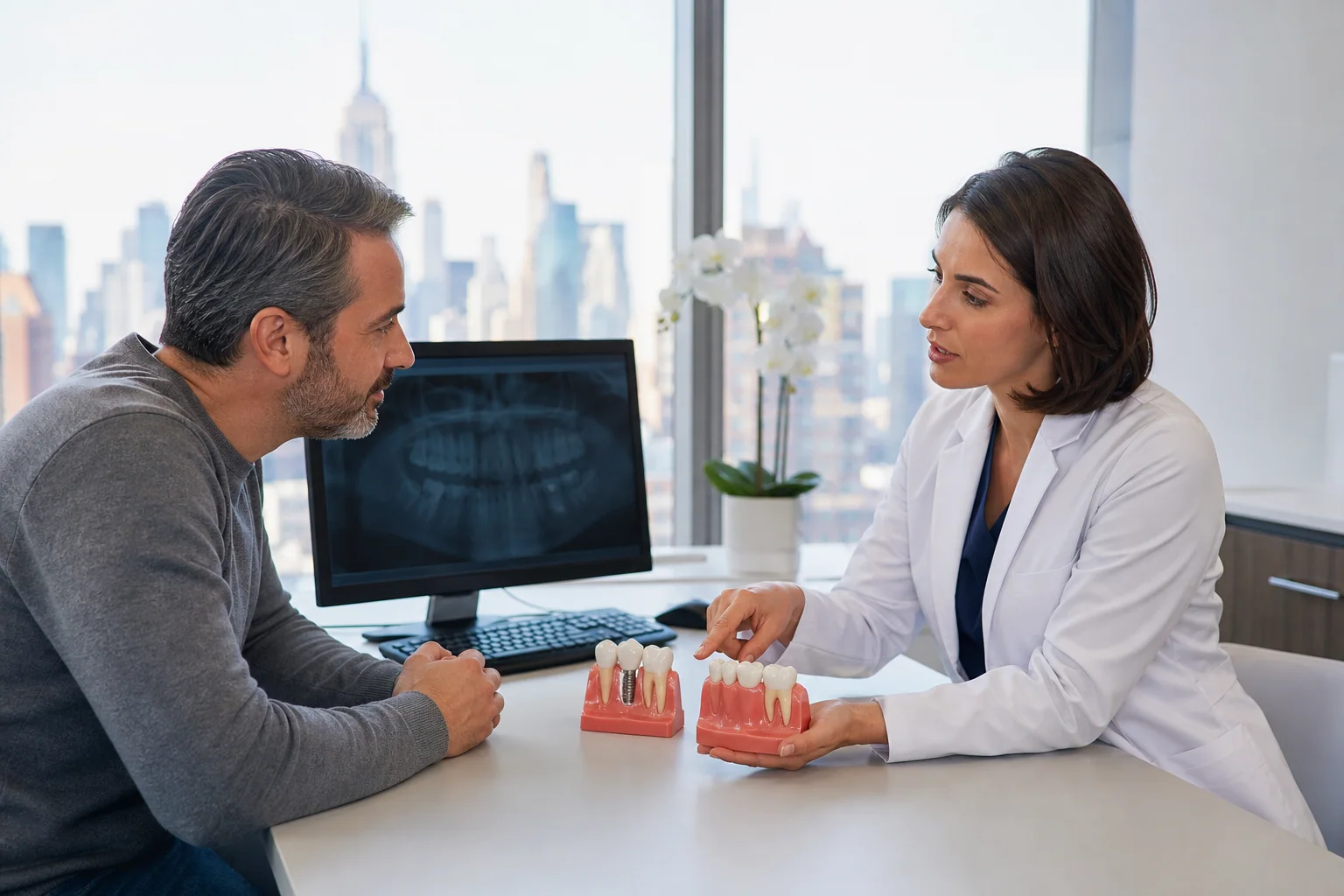
Replacing a missing tooth can improve chewing, speech, appearance, and the stability of the surrounding bite. Two common fixed options are a dental implant with a crown and a tooth-supported bridge. Neither is automatically best for everyone. The condition of the neighboring teeth, available bone, gum health, medical history, timing, budget, and personal preferences all shape the decision.
How a dental implant works
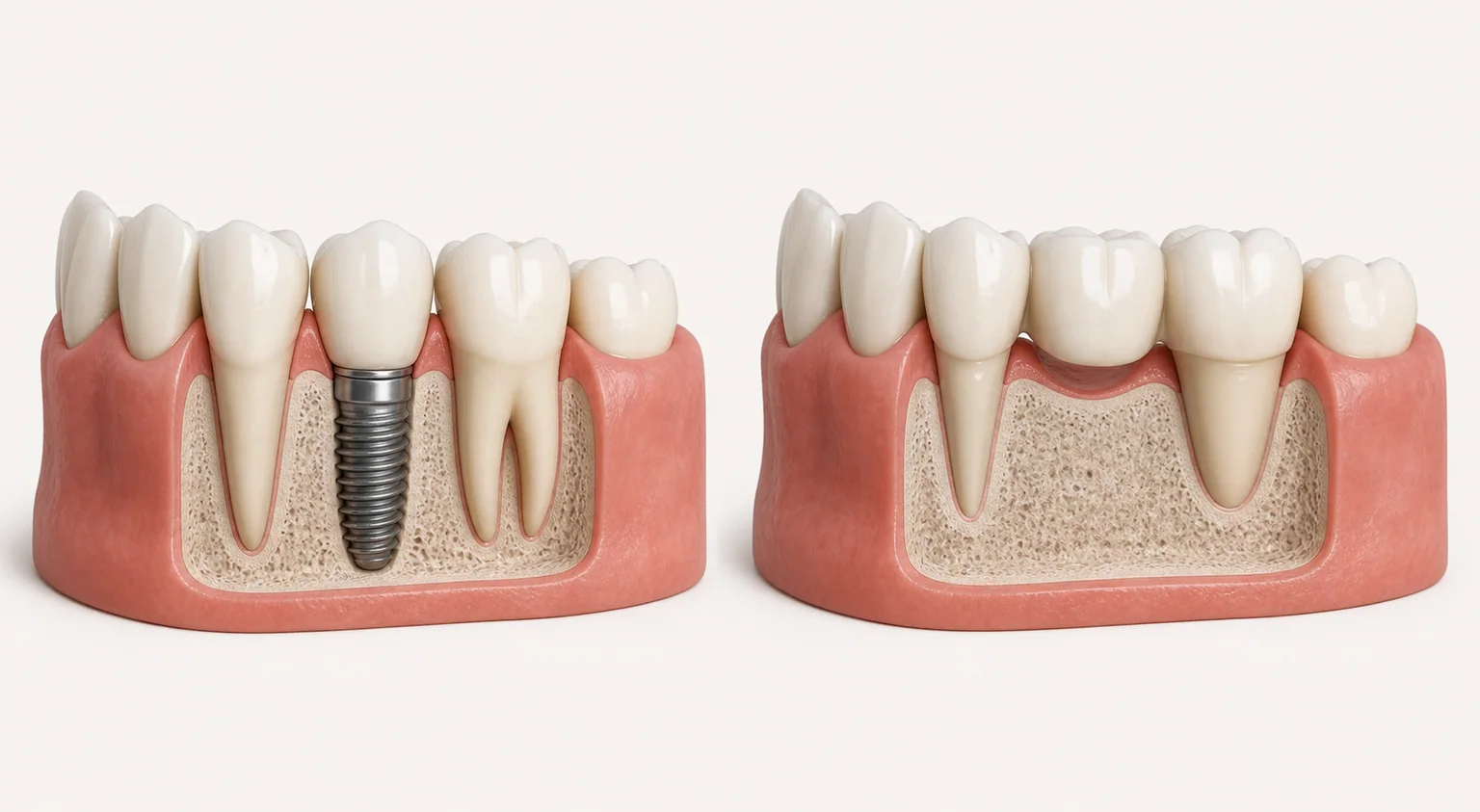
A dental implant is a small post placed in the jawbone to support a replacement tooth. After the implant integrates with the bone, it is typically connected to an abutment and crown. Because the restoration is independently supported, the adjacent teeth usually do not need to be reshaped solely to hold it.
Implant treatment involves surgery and healing time. Adequate bone and healthy gum tissue are important, and some patients need bone grafting or other preparation. Smoking, uncontrolled medical conditions, certain medications, active gum disease, and difficulty maintaining hygiene can affect candidacy or healing. An implant cannot develop a cavity, but the surrounding gums and bone can become inflamed, so meticulous daily cleaning and professional maintenance remain essential.
How a traditional bridge works
A conventional bridge replaces the missing tooth with an artificial tooth joined to crowns on the neighboring teeth. Those support teeth are prepared so the connected restoration fits over them. A bridge does not require an implant surgery and can often be completed more quickly, making it useful when surgery is not desired or recommended.
The tradeoff is that neighboring teeth carry the load and must usually be reshaped. That may be reasonable when those teeth already need crowns or large restorations. If they are healthy and untouched, preserving them may weigh in favor of an implant. Cleaning under the artificial tooth requires floss threaders, interdental brushes, or another technique shown by the dental team.
Questions that guide the choice
- Neighboring teeth: Are they healthy, heavily filled, crowned, or already in need of treatment?
- Bone and gums: Is there enough healthy support for an implant, and is gum disease controlled?
- Health and healing: Do medical conditions, medications, or habits change surgical risk?
- Timing: Are you comfortable with a multi-stage process, or is a shorter timeline important?
- Maintenance: Can you clean the chosen restoration effectively every day?
- Cost: What are the complete fees, insurance benefits, likely maintenance, and possible future repairs?
Think beyond the initial appointment
Both options can function well, but neither has a guaranteed lifetime. Crowns can chip or wear, bridge-supporting teeth can develop decay or nerve problems, and implants can lose bone support if inflammation develops. Grinding and clenching may increase mechanical risk for either option. Ask how the restoration will be monitored and what repair or replacement might involve.
A complete evaluation may include X-rays or 3D imaging, gum measurements, bite analysis, and a review of alternatives such as a removable partial denture or, in some situations, leaving the space. Get a written treatment plan and ask why each step is recommended. The best replacement is the one that fits your whole mouth and health—not simply the one with the newest technology or fastest timeline.
Compare written plans fairly
When seeking a second opinion, make sure both estimates include the same stages: extractions, grafting, temporary teeth, imaging, implant components, laboratory work, and final restorations. A lower initial figure may exclude necessary steps. Ask who handles complications and what warranties actually cover. Also consider the value of preserving healthy neighboring teeth, the time required away from work, and your ability to return for maintenance. Cost matters, but it is only one part of long-term value.
Leave a Reply