
Teeth naturally vary in color, and a healthy smile is not necessarily a paper-white one. Coffee, tea, red wine, tobacco, aging, and everyday pigments can darken teeth or create surface stains. Whitening can improve some discoloration, but the safest plan starts with knowing why the color changed and whether the teeth and gums are healthy enough for treatment.
Start with a dental evaluation
Cavities, gum inflammation, cracks, worn enamel, or exposed roots may make whitening uncomfortable or inappropriate until those concerns are addressed. A single dark tooth can follow trauma or a nerve problem and should not be treated like general staining. White spots, medication-related discoloration, and changes inside the tooth may respond differently from surface stains.
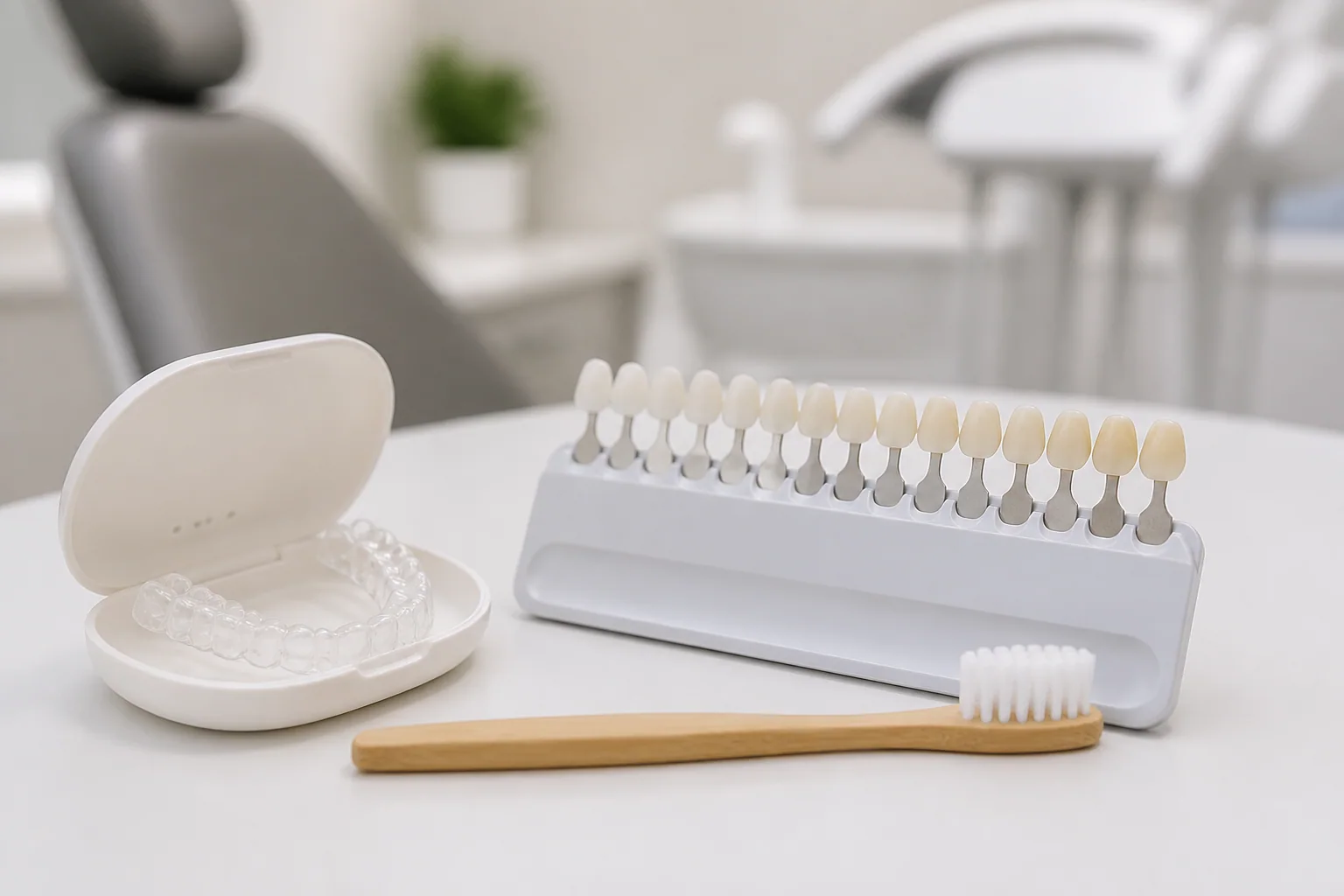
Fillings, crowns, veneers, bridges, and bonding do not whiten the way natural enamel does. Lightening nearby teeth can create a color mismatch, so discuss visible restorations before treatment. A dentist can also separate stain that may improve with professional cleaning from discoloration that needs a bleaching agent or another cosmetic option.
Professional and store-bought options
In-office whitening uses concentrated materials under professional supervision and can produce a faster change. Dentist-provided take-home trays use a prescribed gel over a longer period and are shaped to fit the mouth. Over-the-counter strips and gels may be effective for mild, generalized staining when used exactly as directed. Whitening toothpaste mainly removes some surface stain; it does not substantially change the tooth’s internal color.
More product, longer wear, or mixing methods does not guarantee a better result. Overuse can increase sensitivity and irritate gums. Avoid unregulated products with unclear ingredients and highly abrasive DIY methods involving charcoal, acidic fruit, or harsh powders. “Natural” does not mean enamel-safe.
Managing sensitivity
- Tell the dentist about existing sensitivity, gum recession, and previous whitening reactions.
- Use a soft toothbrush and a desensitizing fluoride toothpaste if recommended.
- Follow the exact amount, frequency, and wear time on the product or professional plan.
- Pause and seek advice if discomfort is significant, lingers, or affects one tooth more than others.
- Avoid very hot or cold foods while the teeth are temporarily sensitive.
Keeping the result realistic
Whitening is not permanent. Color can gradually return as pigments accumulate. Brush twice daily with fluoride toothpaste, clean between teeth, attend preventive visits, and rinse with water after strongly colored drinks. Using a straw for some cold beverages may reduce contact with front teeth, but it does not eliminate exposure. Avoid tobacco for both oral and overall health.
Ask for a shade that looks natural with your skin tone and existing dental work rather than chasing an artificial maximum. Pregnant or breastfeeding patients and minors should discuss timing and alternatives with qualified health professionals. Whitening is an elective cosmetic treatment; it should never come before treating pain, decay, or gum disease. A thoughtful plan can brighten a smile while keeping comfort and long-term health at the center.
Set expectations before paying
Ask which stains are likely to respond, the expected number of sessions, how sensitivity will be managed, and whether a maintenance plan is included. Request the full fee and clarify whether future replacement of visible restorations could be needed for a color match. Take standardized before photos in similar lighting instead of judging the result under different bathroom bulbs. Gradual, controlled improvement is safer and often looks more natural than trying to reach the lightest possible shade immediately.
Stop and seek professional advice if whitening causes gum burns, strong pain, or discomfort that does not settle. A cosmetic result should never come at the expense of healthy tissue.
Leave a Reply