
Good oral hygiene does not require a complicated shelf of products or a perfect morning. It requires a few effective steps performed consistently. For New Yorkers managing commutes, shift work, school drop-offs, or a tiny shared bathroom, the most useful routine is the one that remains realistic on the busiest day. Start with two anchors: brush thoroughly twice a day with fluoride toothpaste and clean between your teeth every day.
Make two minutes count
Choose a soft-bristled manual or powered toothbrush that is comfortable to control. Apply a pea-sized amount of fluoride toothpaste, angle the bristles toward the gumline, and use gentle, small movements. Clean the outer, inner, and chewing surfaces of every tooth. A hard scrub is not a better clean; excess pressure can irritate gums and wear exposed root surfaces. Brush your tongue gently, then spit out the toothpaste. Avoid immediately rinsing away all the remaining fluoride.
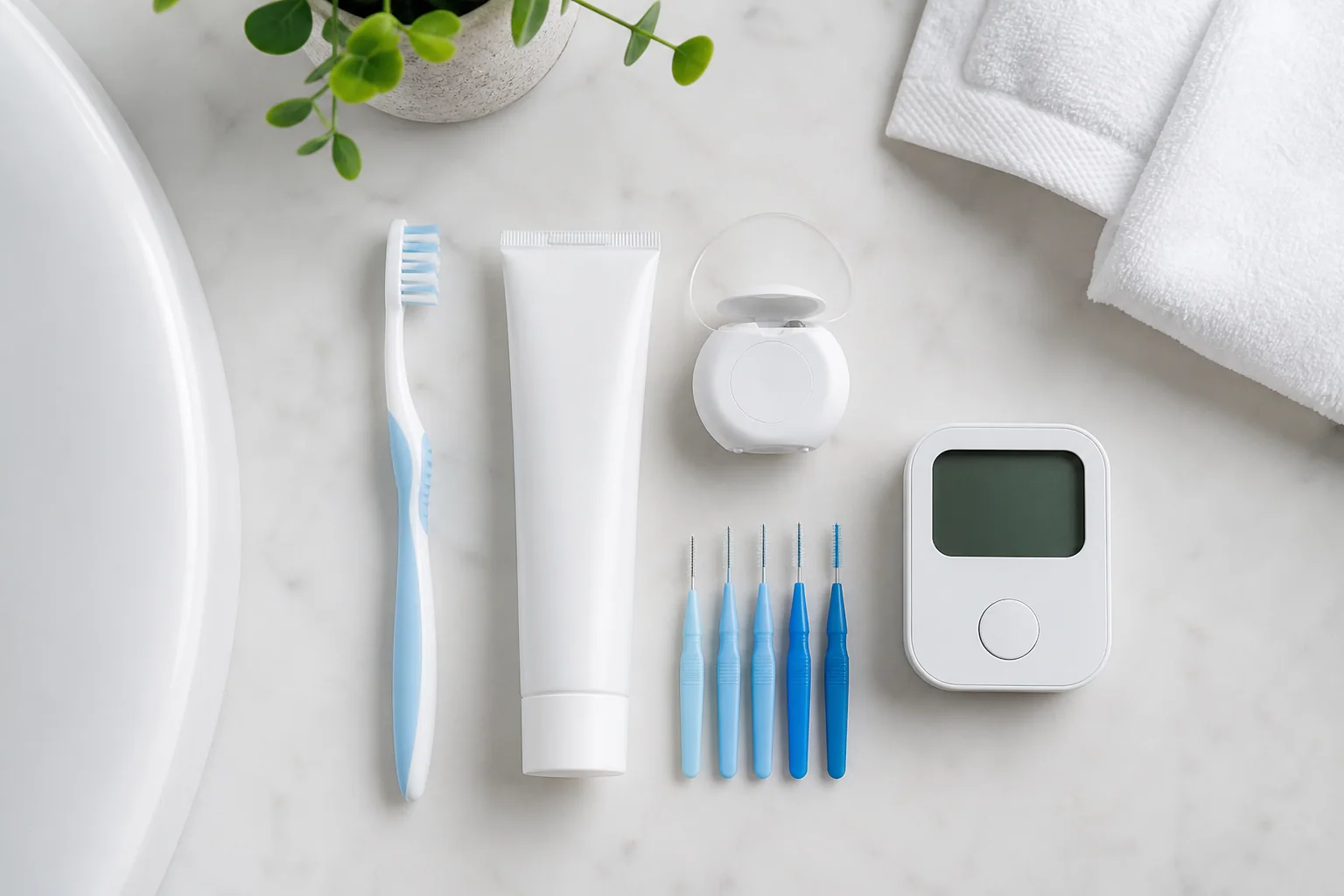
Use a timer, a two-minute song, or the timer built into an electric brush. Replace a toothbrush or brush head roughly every three to four months, or sooner if the bristles are frayed. Store it upright where it can air-dry rather than sealed while wet.
Clean where the toothbrush cannot reach
Plaque collects between teeth and just under the gumline. Traditional floss works well when it is guided gently between contacts, curved into a C-shape against one tooth, and moved up and down before repeating on the neighboring tooth. Do not snap floss into the gums. People with larger spaces, braces, bridges, or limited hand dexterity may prefer interdental brushes, floss holders, threaders, or a water flosser recommended by a dental professional.
The best time is the time you can repeat. Some people floss before the evening brush; others clean between teeth after lunch or while watching television. The National Institute of Dental and Craniofacial Research explains that interdental cleaning disrupts plaque in areas a toothbrush cannot reach.
Create a NYC-ready routine
- Morning: Brush after breakfast when possible, or wait a little after acidic foods and drinks so softened enamel is not scrubbed immediately.
- During the day: Drink water regularly. Sugar-free gum may help stimulate saliva when brushing is unavailable, but it does not replace brushing.
- Evening: Clean between teeth, brush carefully, and make water the last drink before bed.
- On the go: Keep a compact brush, small toothpaste, and floss in a clean pouch rather than loose in a bag.
Avoid common shortcuts
Mouthwash can be useful for some people, but it does not physically remove plaque and should not replace brushing or interdental cleaning. Whitening toothpaste mainly targets surface stains and may be abrasive; ask a dentist if you have sensitivity or exposed roots. Bleeding during cleaning is not a reason to stop indefinitely. Gentle, consistent care may help mild inflammation, but persistent bleeding, swelling, recession, bad breath, or pain should be assessed.
Habit beats intensity. Pair brushing with an existing cue, keep supplies visible, and prepare a travel set before you need it. Regular dental exams and professional cleanings remain important because home care cannot diagnose hidden decay or remove hardened tartar. A streamlined routine, repeated every day, is one of the highest-value investments a busy New Yorker can make.
Use professional feedback
At your next cleaning, bring the products you actually use or take photos of them. Ask the hygienist to show you where plaque is accumulating and demonstrate a technique for those specific spaces. If a tool is painful, awkward, or impossible to use around dental work, say so; another size or design may be more practical. A personalized routine is more valuable than copying a viral method that was never intended for your teeth, gums, or restorations.
Leave a Reply