
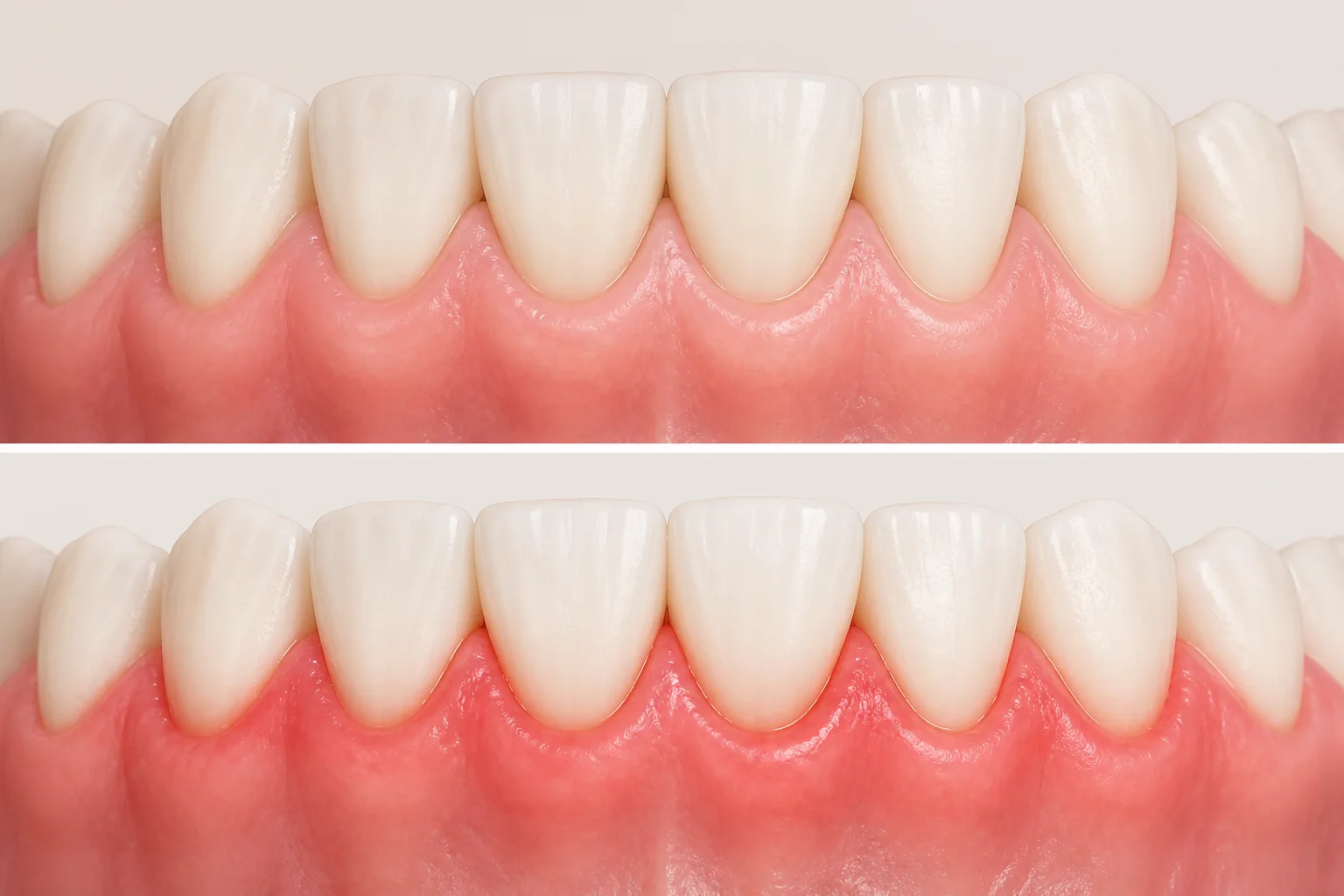
Healthy gums form a firm seal around the teeth and generally do not bleed during gentle brushing or flossing. Gum disease often begins quietly, which makes early changes easy to dismiss. Gingivitis—the early stage involving gum inflammation—can often be controlled with improved home care and professional cleaning. Periodontitis is more advanced and can damage the bone and tissues that support teeth. Recognizing warning signs early gives you a better opportunity to protect that support.
1. Bleeding when brushing or flossing
Occasional bleeding can follow an accidental injury or a new cleaning technique, but repeated bleeding is not something to normalize. Plaque at the gumline can trigger inflammation, making tissue more likely to bleed. Continue gentle cleaning rather than abandoning the area, and arrange an evaluation if bleeding persists.
2. Red, swollen, or tender gums
Inflamed gums may look darker or brighter than usual, feel puffy, or become sore to touch. Swelling limited to one area may also come from trapped food, an abscess, or another local problem. A dentist can identify the source instead of relying on appearance alone.
3. Persistent bad breath
Morning breath or odor after a strong meal is common. Bad breath that returns quickly despite brushing, tongue cleaning, and hydration can be associated with plaque, tartar, gum pockets, cavities, dry mouth, or other conditions. Gum or mints may briefly mask the symptom but do not address its cause.
4. Gums pulling away from teeth
Recession can make teeth appear longer or expose sensitive root surfaces. It may relate to inflammation, tooth position, forceful brushing, tobacco use, grinding, or naturally thin tissue. Because receded gum does not simply grow back, early assessment can help control contributing factors.
5. New spaces or food trapping
Changes in gum contour or tooth position can create gaps where food repeatedly catches. Do not force sharp objects into the space. Note where it happens and ask about an appropriate interdental brush, flossing method, or treatment after the area is examined.
6. Pain when chewing or tooth sensitivity
Gum recession and periodontal problems can contribute to root sensitivity or discomfort, although cracks, decay, bite problems, and inflamed tooth nerves can cause similar symptoms. Pain is a reason for diagnosis, not a reliable way to distinguish these conditions at home.
7. Loose teeth or a changing bite
An adult tooth that feels loose, moves, or suddenly meets its opposing tooth differently needs prompt professional attention. The NIDCR lists loose or sensitive teeth and pain while chewing among possible gum-disease symptoms. Trauma and other conditions can also cause movement, so an examination and often X-rays are needed.
Protecting your gums
Brush twice daily with fluoride toothpaste and a soft brush, clean between teeth every day, avoid tobacco, manage dry mouth, and attend professional cleanings at the interval recommended for you. Tell your dentist about diabetes, pregnancy, medications, and previous periodontal treatment. Seek urgent care for rapidly increasing swelling, fever, or difficulty breathing or swallowing. Gum disease is common, but it is not inevitable; consistent care and timely evaluation can make a meaningful difference.
What an evaluation may include
A dentist or hygienist may measure the spaces around teeth with a small periodontal probe, check for recession and mobility, review risk factors, and take X-rays when needed to evaluate supporting bone. Treatment ranges from routine cleaning and improved home care to deeper cleaning or referral to a periodontist. Ask for your measurements and what changes the team will monitor. Understanding the baseline makes follow-up recommendations more meaningful and helps you participate in long-term maintenance.
Leave a Reply