
Children’s oral-care needs change quickly from the first tooth through the teenage years. A predictable routine at home, regular preventive visits, and age-appropriate protection can reduce the chance that a small concern turns into pain or missed school. The following guide gives NYC parents a practical framework, but every child’s schedule should reflect their development, health history, and dentist’s recommendations.
Babies: before and after the first tooth
Before teeth appear, wipe the gums gently with a clean, damp cloth. Once the first tooth erupts, brush twice daily with a soft infant brush and a tiny smear of fluoride toothpaste—about the size of a grain of rice. Avoid putting a baby to bed with a bottle containing milk, formula, juice, or another sweetened drink, because frequent sugar exposure can promote early decay.
Schedule the first dental visit by the first birthday or within six months of the first tooth appearing. This early visit is usually short and preventive. It gives parents a chance to discuss feeding, fluoride, teething, pacifiers, injury prevention, and brushing technique before a problem develops.
Toddlers and preschoolers
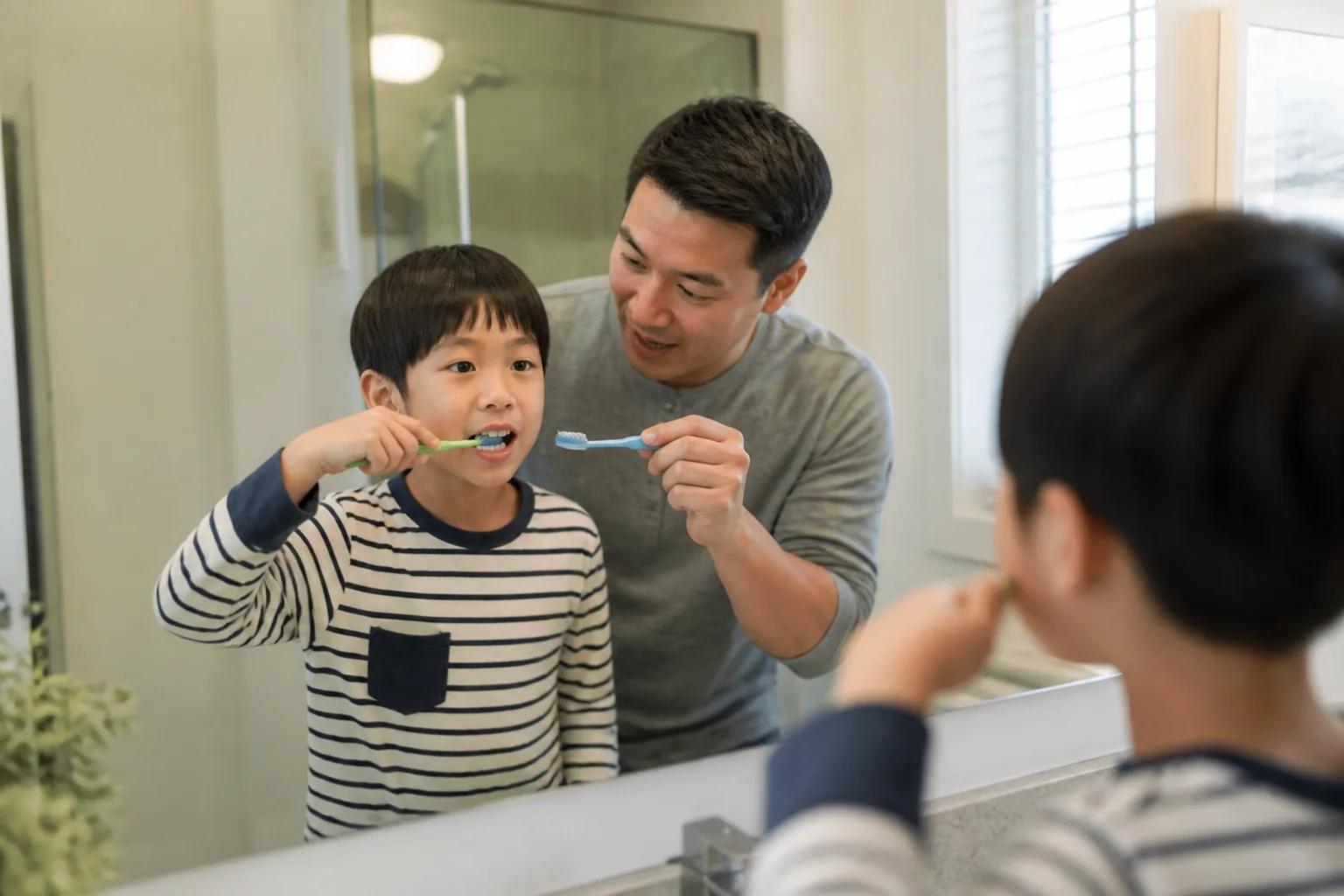
At about age three, children can generally use a pea-sized amount of fluoride toothpaste, with an adult supervising so they spit rather than swallow it. Brush for two minutes twice daily and begin flossing wherever two teeth touch. Let the child choose a brush color or a song, but keep the adult responsible for the actual cleaning. A quick “your turn, then my turn” routine often preserves cooperation while ensuring a thorough finish.
School-age children
Permanent molars begin appearing toward the back of the mouth and can have deep grooves that trap plaque. Ask the dentist whether sealants are appropriate. Sealants form a protective coating on chewing surfaces, while fluoride helps strengthen enamel. Children may want independence, but parents should continue checking brushing quality until the child has the coordination and patience to reach every surface consistently.
- Pack water instead of frequent sweet drinks.
- Keep snack times structured rather than grazing throughout the day.
- Choose a properly fitted mouthguard for sports with collision or fall risk.
- Tell the dentist about snoring, mouth breathing, thumb habits, or jaw discomfort.
Tweens and teenagers
Busy schedules, orthodontic appliances, sports, energy drinks, and late-night snacking can raise oral-health challenges. Braces require careful cleaning around brackets and beneath wires with tools recommended by the orthodontic team. Discuss the effects of vaping and tobacco directly and without shame. Teens considering whitening should first have stains, sensitivity, decay, and gum health evaluated; products are not suitable for every age or mouth.
Making NYC dental care easier
Choose an office that communicates well with children, explains costs, and is realistically reachable from home or school. Bring insurance information, medication details, and any relevant school or medical forms. If cost is a barrier, the NYC Health Department links to low-cost providers by borough and the NYC Health Map; 311 can also help with referrals. Call promptly for pain, swelling, a broken tooth, or an injury rather than waiting for the next routine visit. Calm, regular care helps children view dentistry as an ordinary part of staying healthy.
Keep appointments positive
Describe a dental visit in simple, neutral language: the team will count teeth, take pictures if needed, and help keep the mouth strong. Avoid sharing frightening stories or promising that nothing will feel unusual. Bring a comfort item and schedule around naps or school demands when possible. Praise cooperation rather than a “perfect” result. If a child is very anxious or has developmental, sensory, or medical needs, discuss them with the office in advance so accommodations can be planned.
Leave a Reply